
Old Town Residence
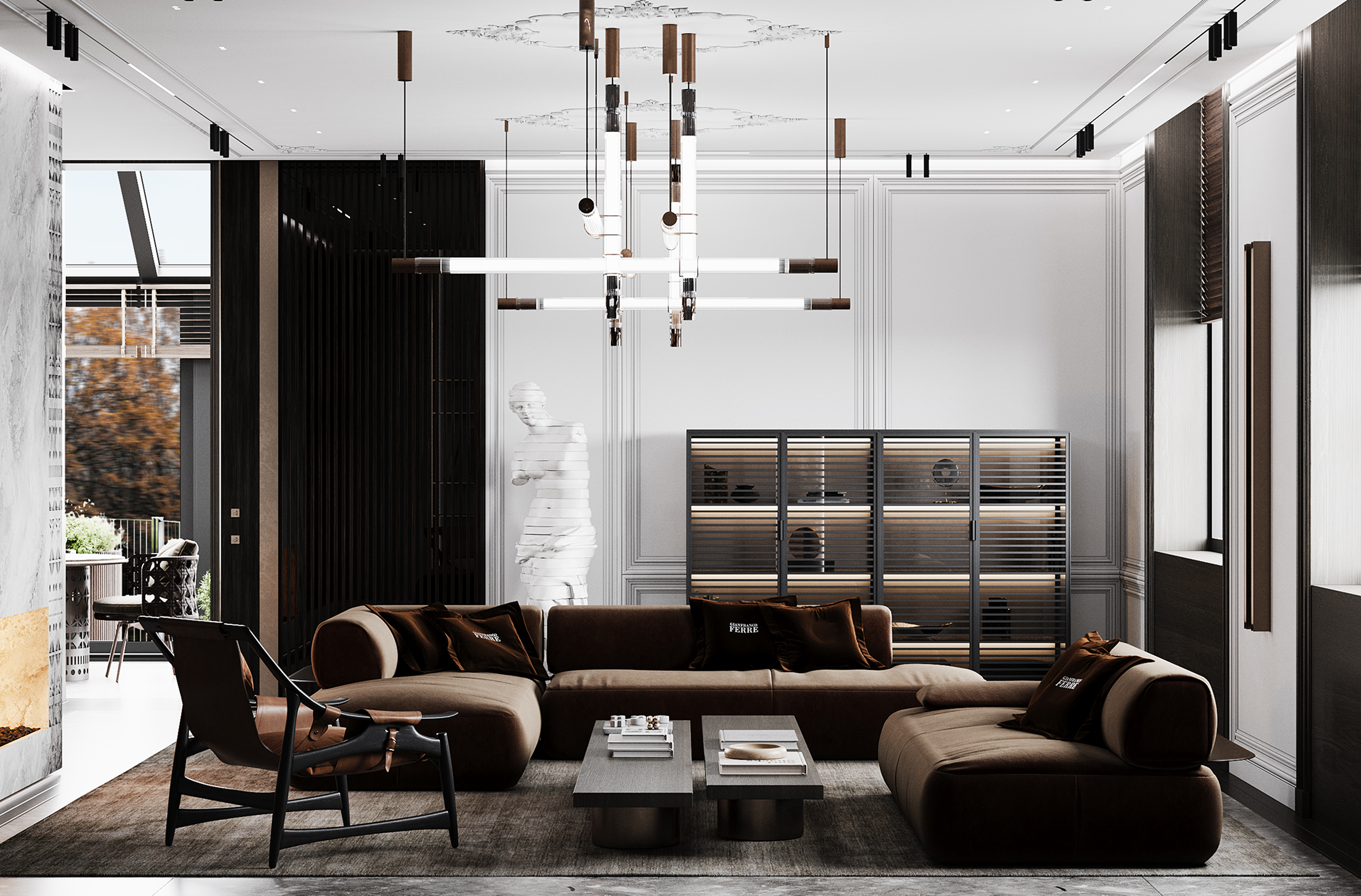
General concept
The interior of this two-level apartment in Kyiv’s historic center is based on a dialogue between contemporary classic design and reinterpreted elements of Ukrainian cultural heritage. Classical proportions and decorative moldings are expressed through light, lines, and material choices, allowing the space to feel refined and current rather than literal.
A restrained palette of warm neutrals, natural wood, and stone is complemented by subtle dark metal accents. Ukrainian references are embedded into the interior language through ornamentation, textures, and form — not as decoration, but as an integral structural layer of the design.
Living area
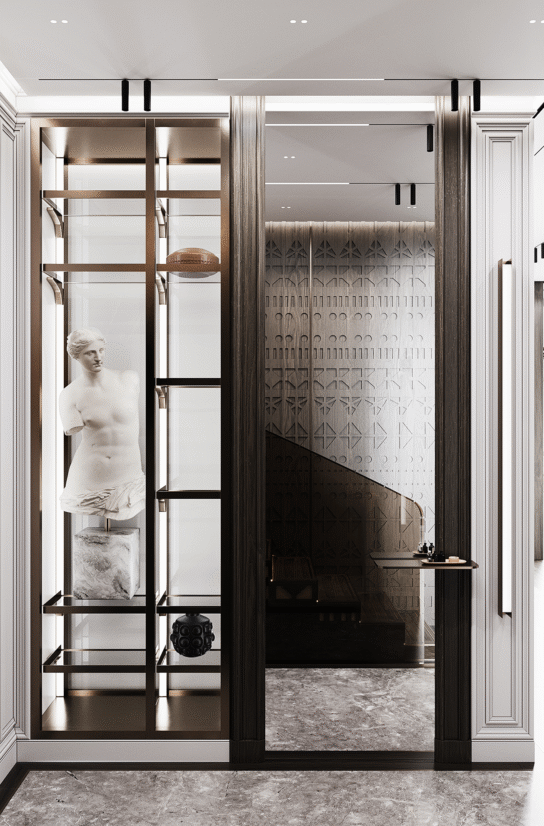
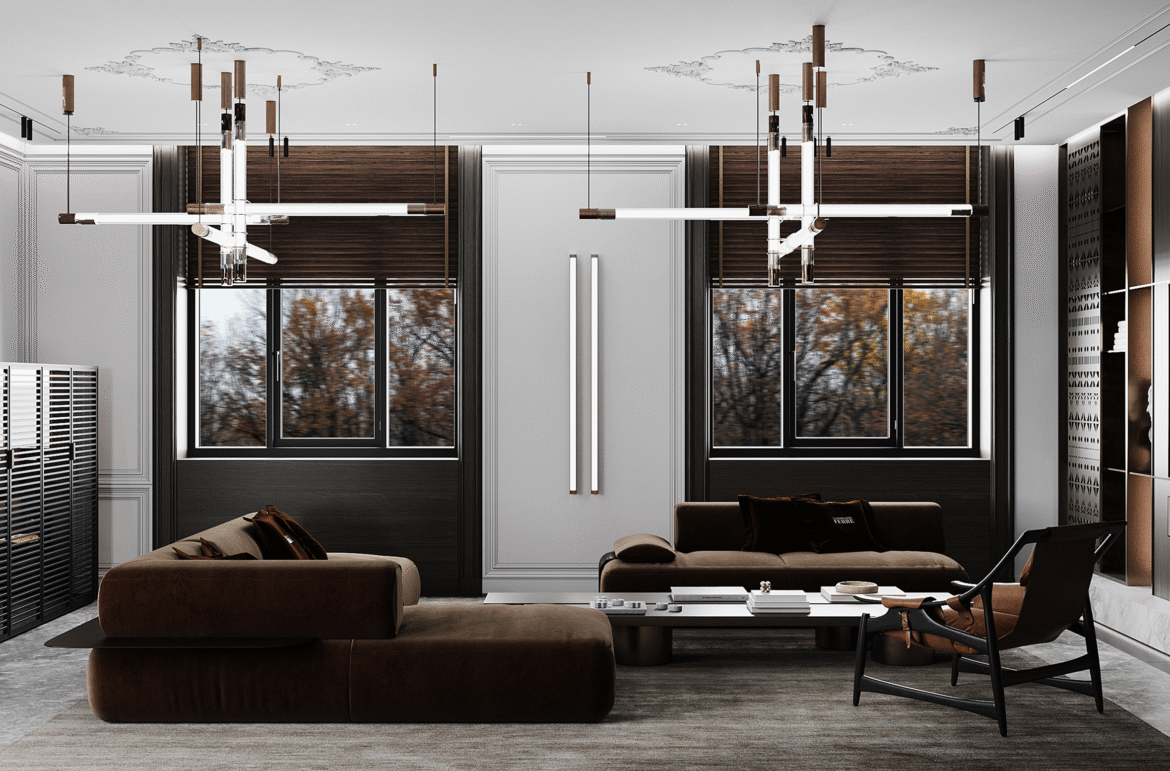
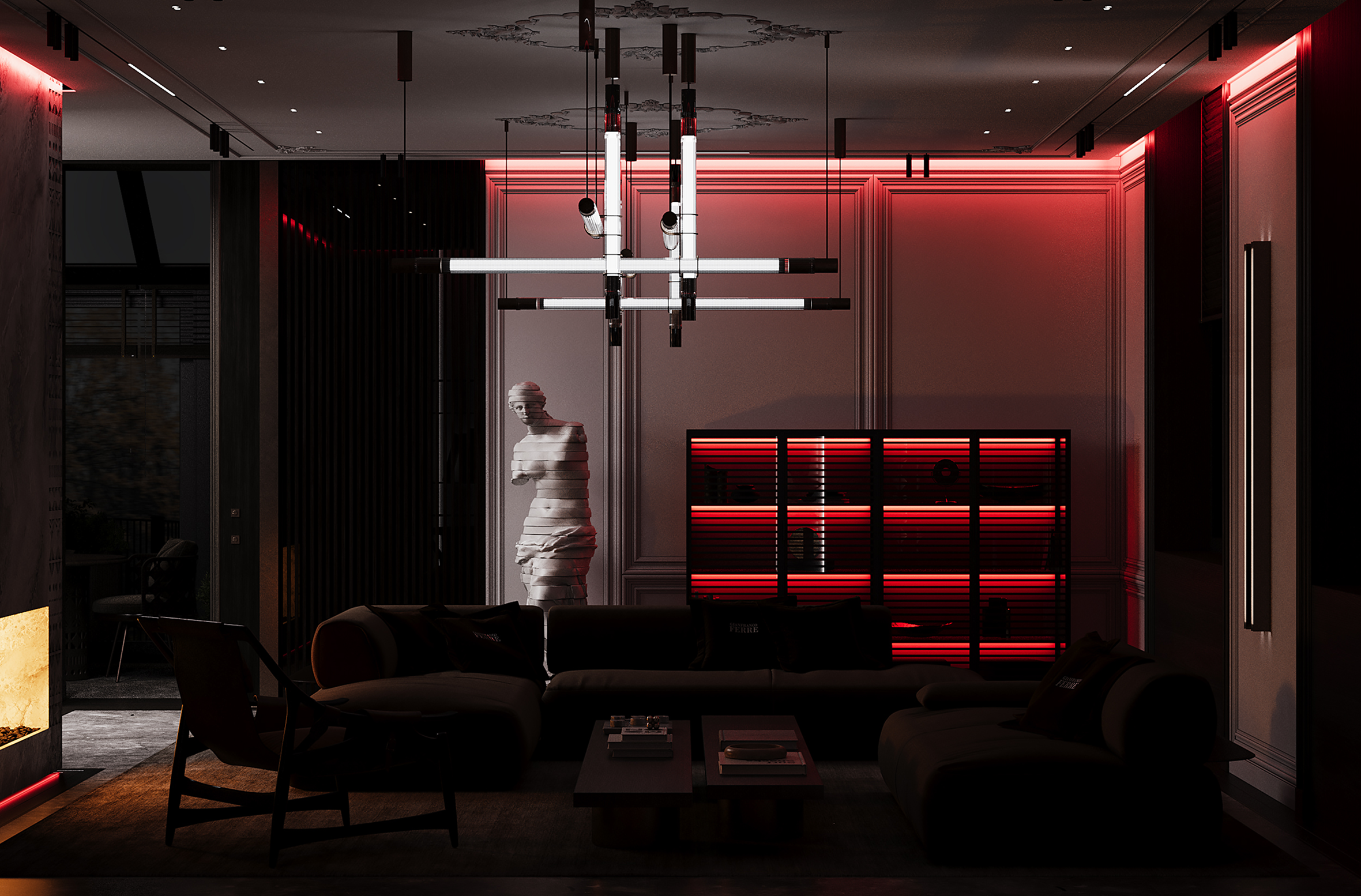
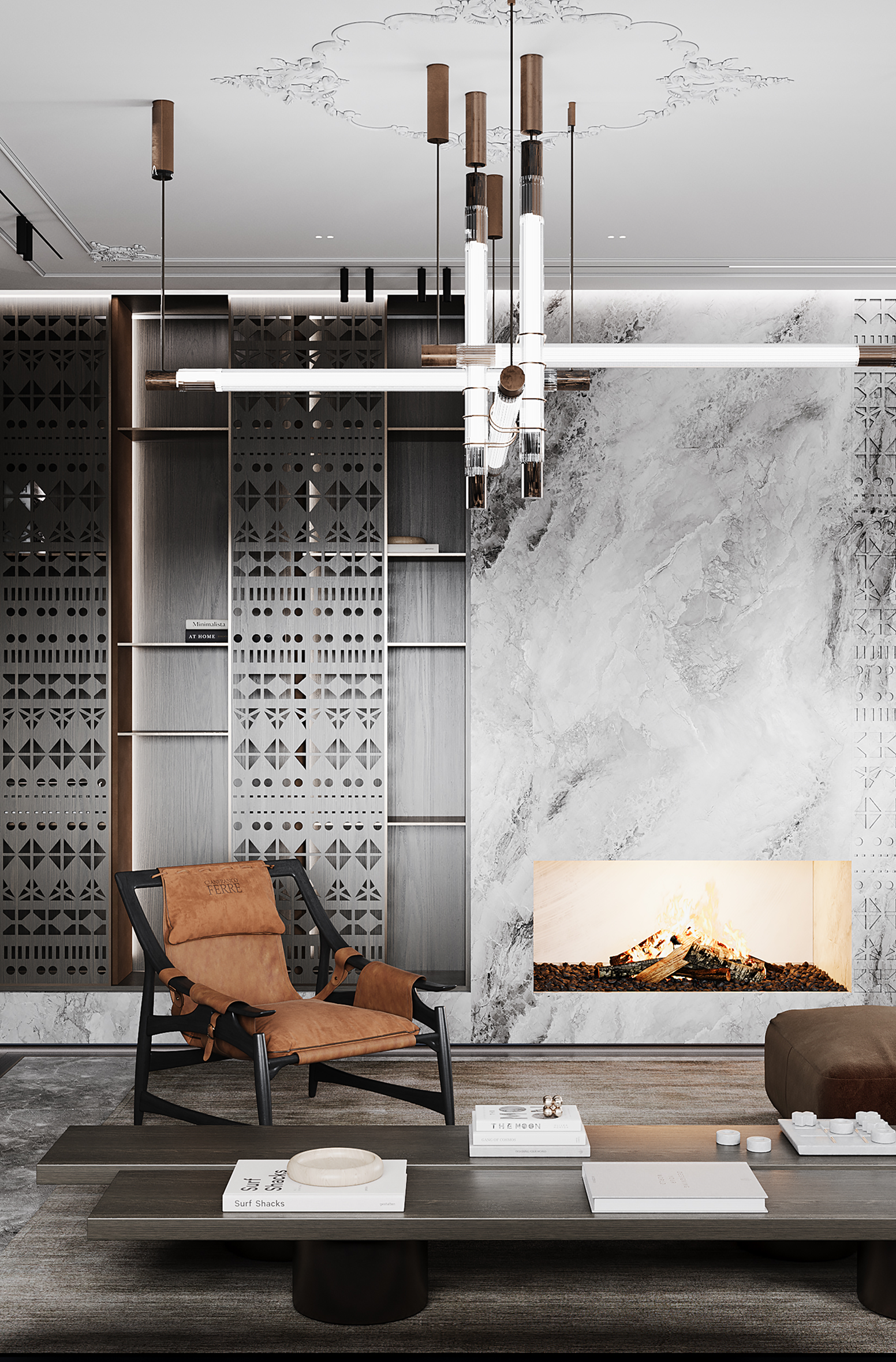
The living space combines contemporary classic principles with precise forms and a deep, controlled palette. Ornamental wall panels reference Ukrainian motifs through graphic rhythm rather than direct symbolism.
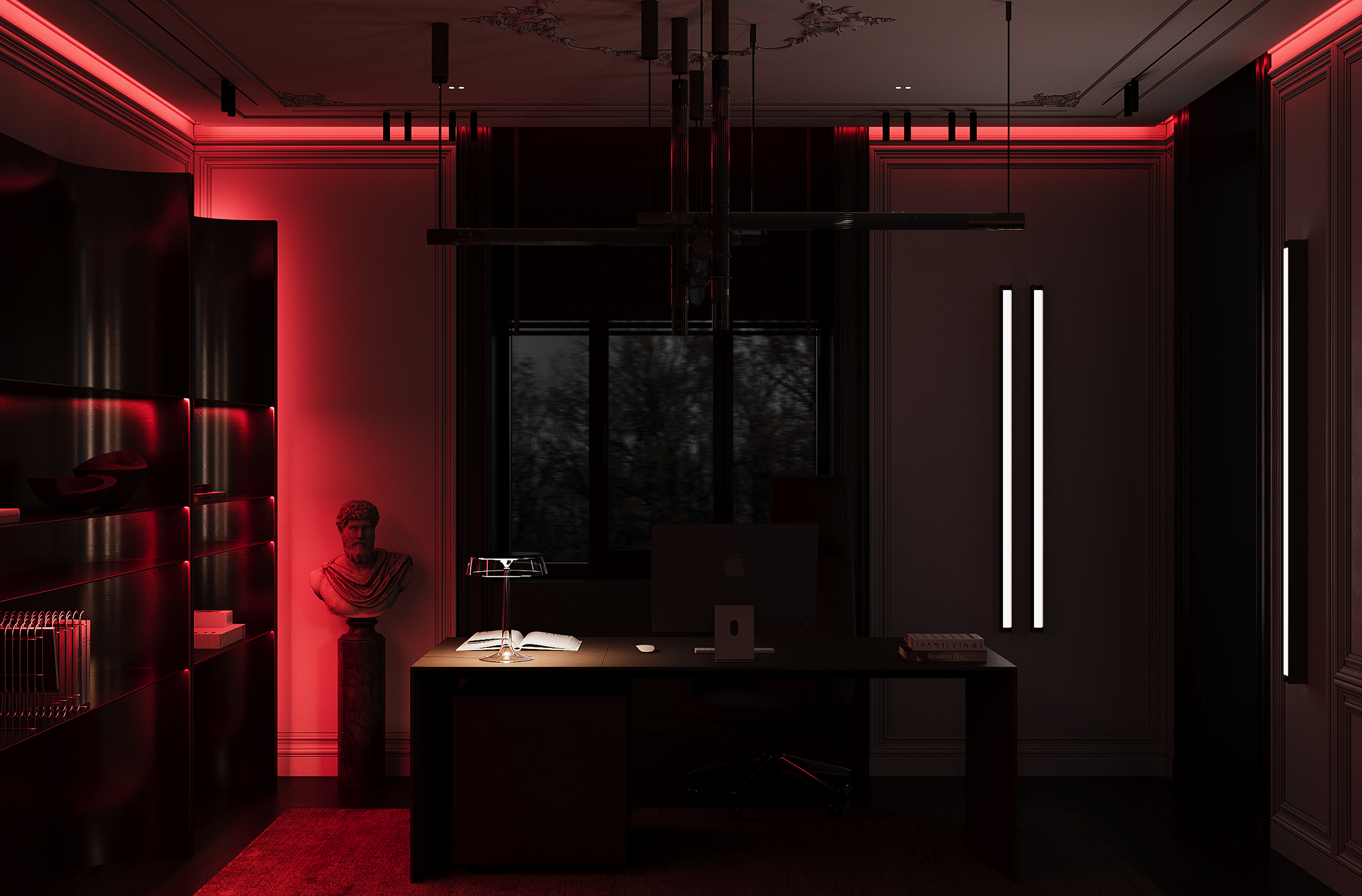
Lighting acts as a spatial tool, shifting the atmosphere from open and daylight-oriented to more intimate evening scenarios. Furniture and art objects are composed as a cohesive whole, where each element serves both function and balance, reinforcing the clarity and composure of the interior.
Kitchen
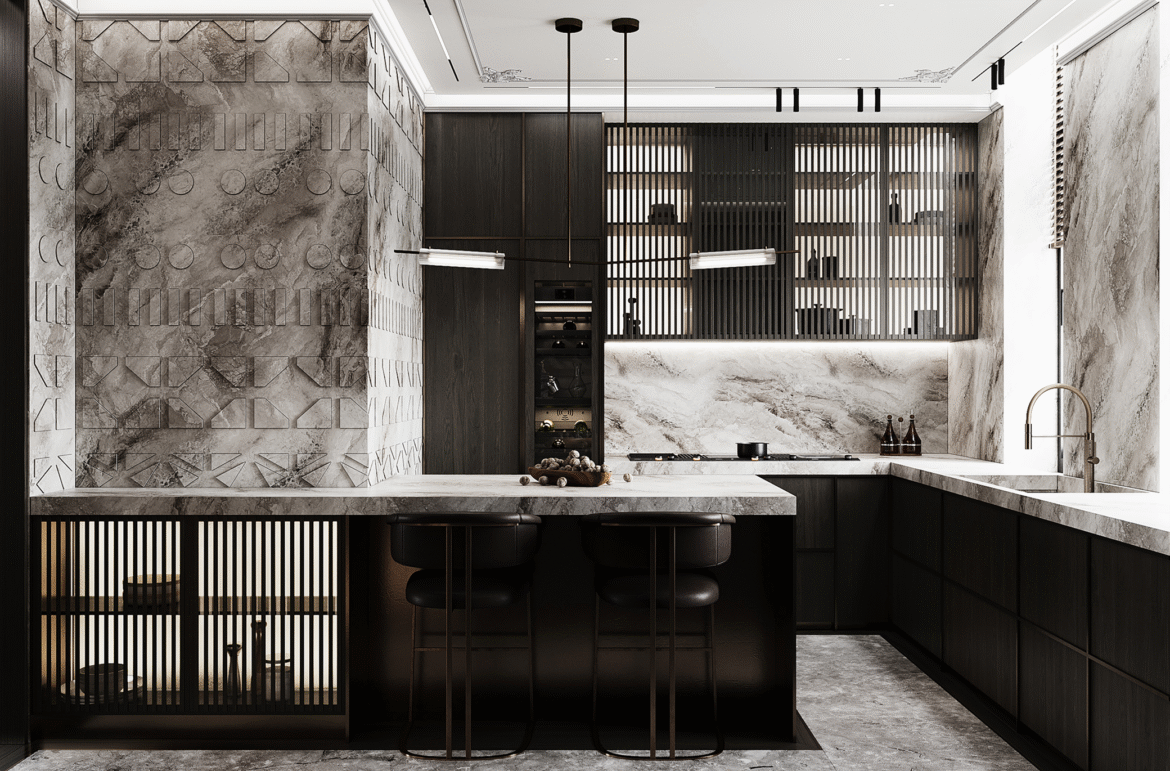
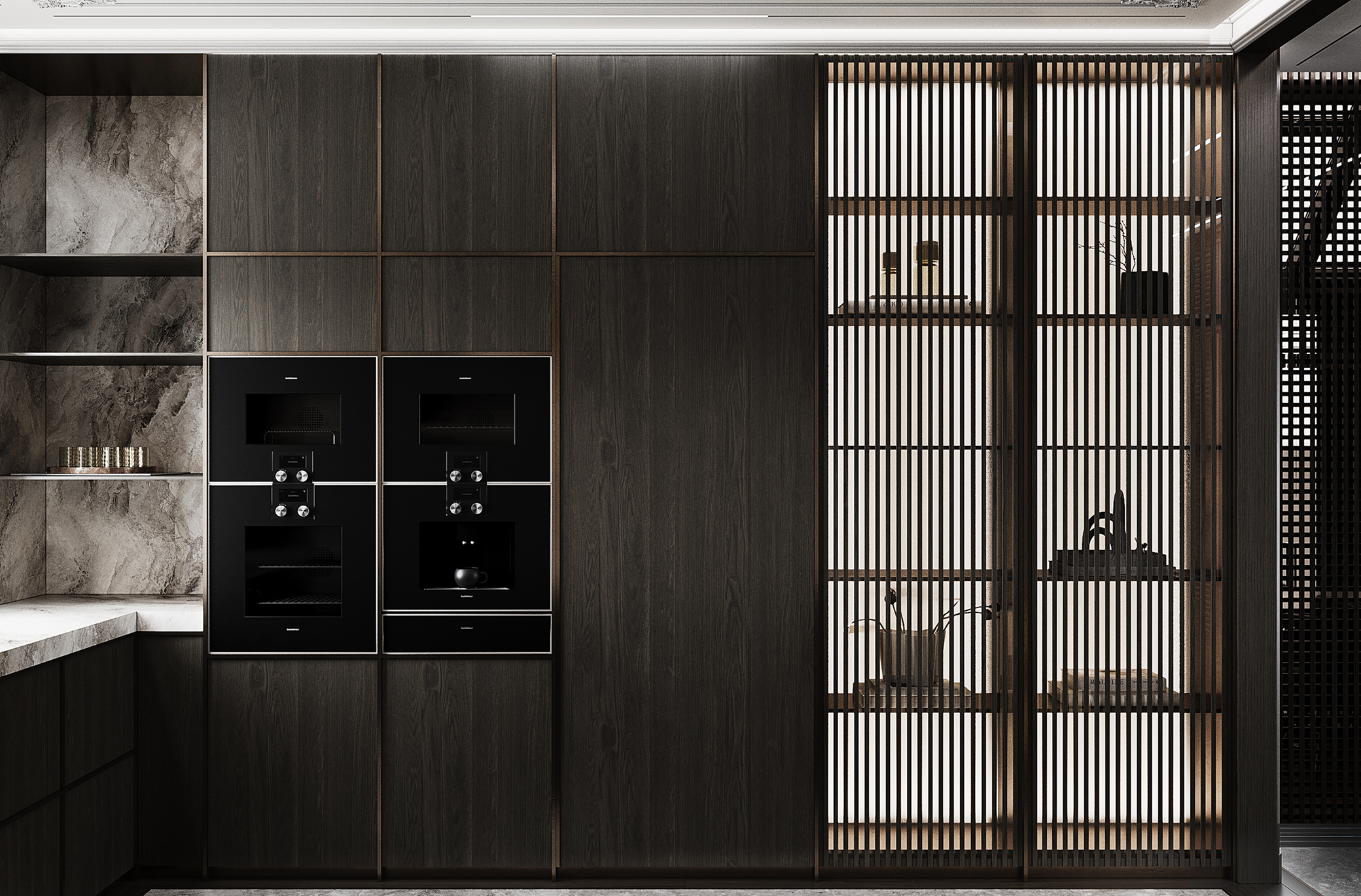
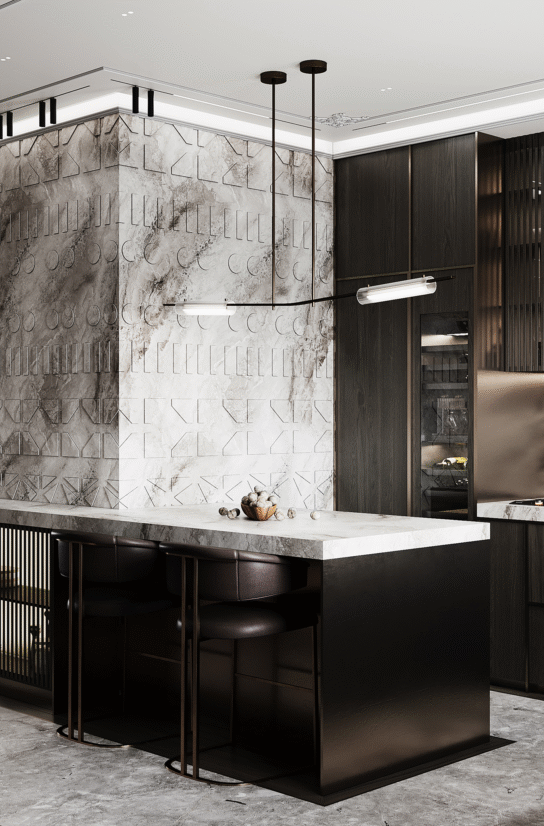
The kitchen is designed around a deep, understated palette with a focus on surface texture and graphic clarity. Materials create a unified visual field that conveys structure and presence without overt emphasis.
Appliances and storage systems are discreetly concealed, preserving a clean silhouette and maintaining the integrity of the overall composition.
Dining area
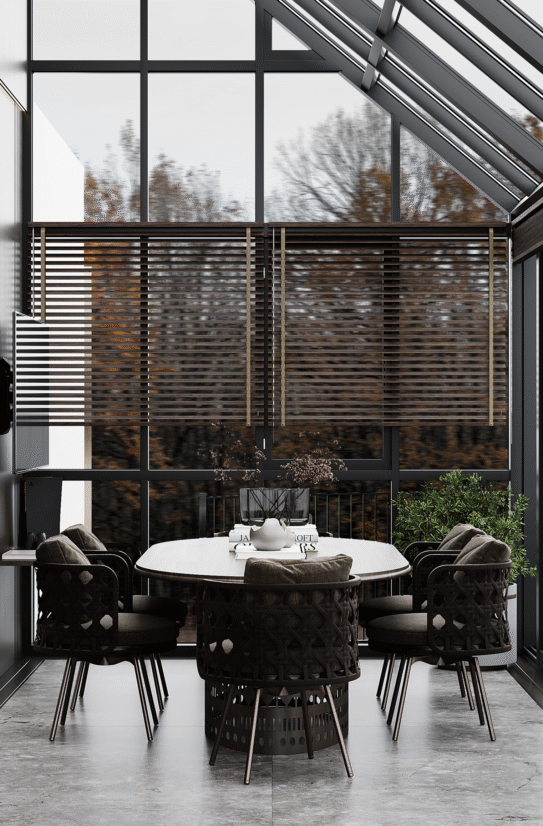
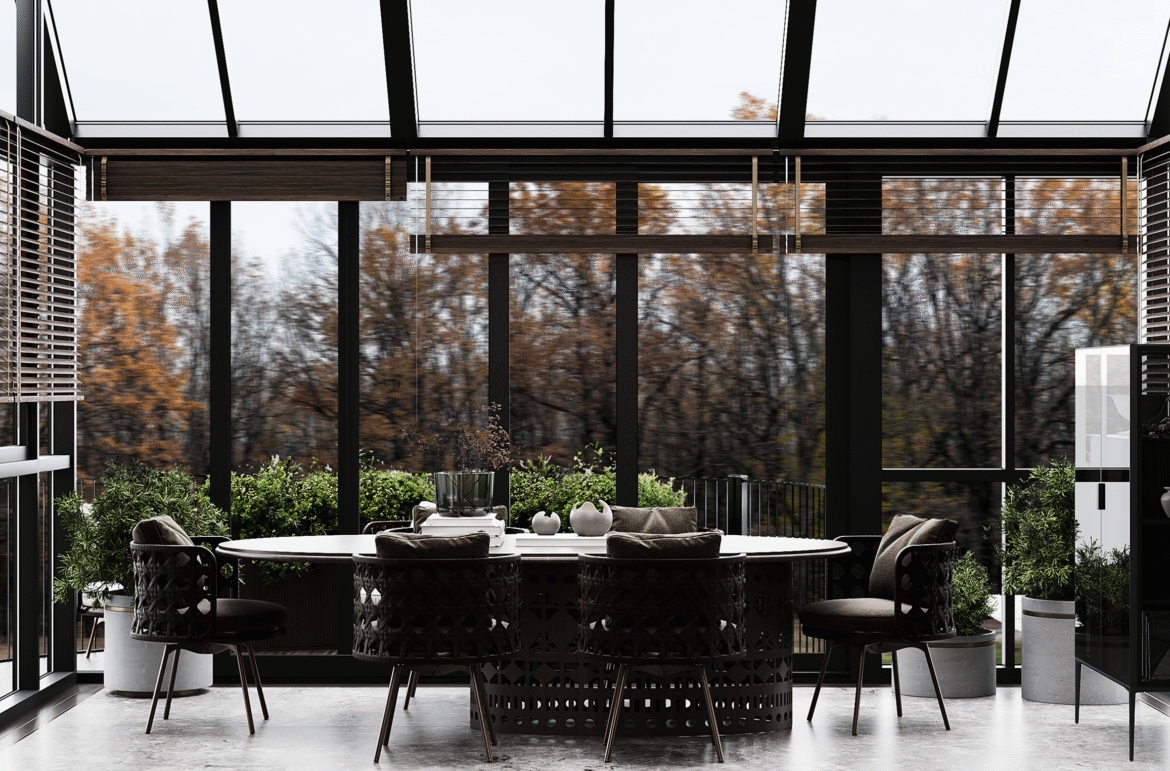
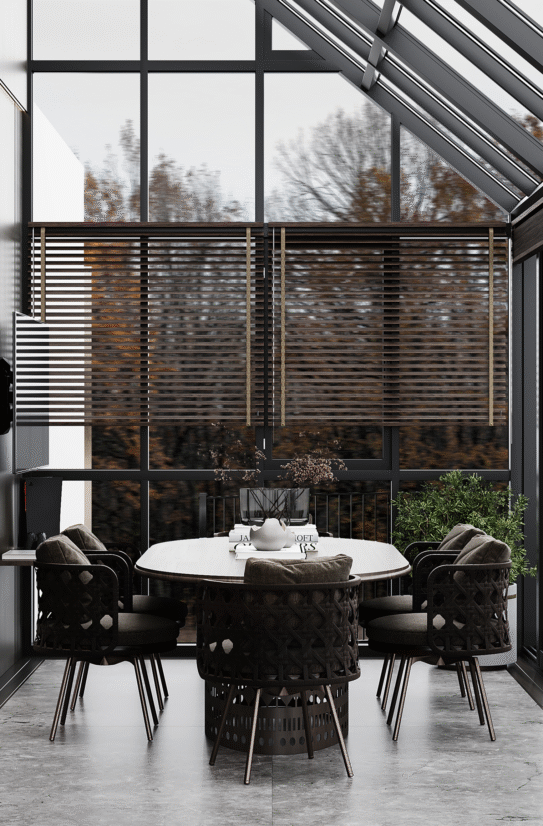
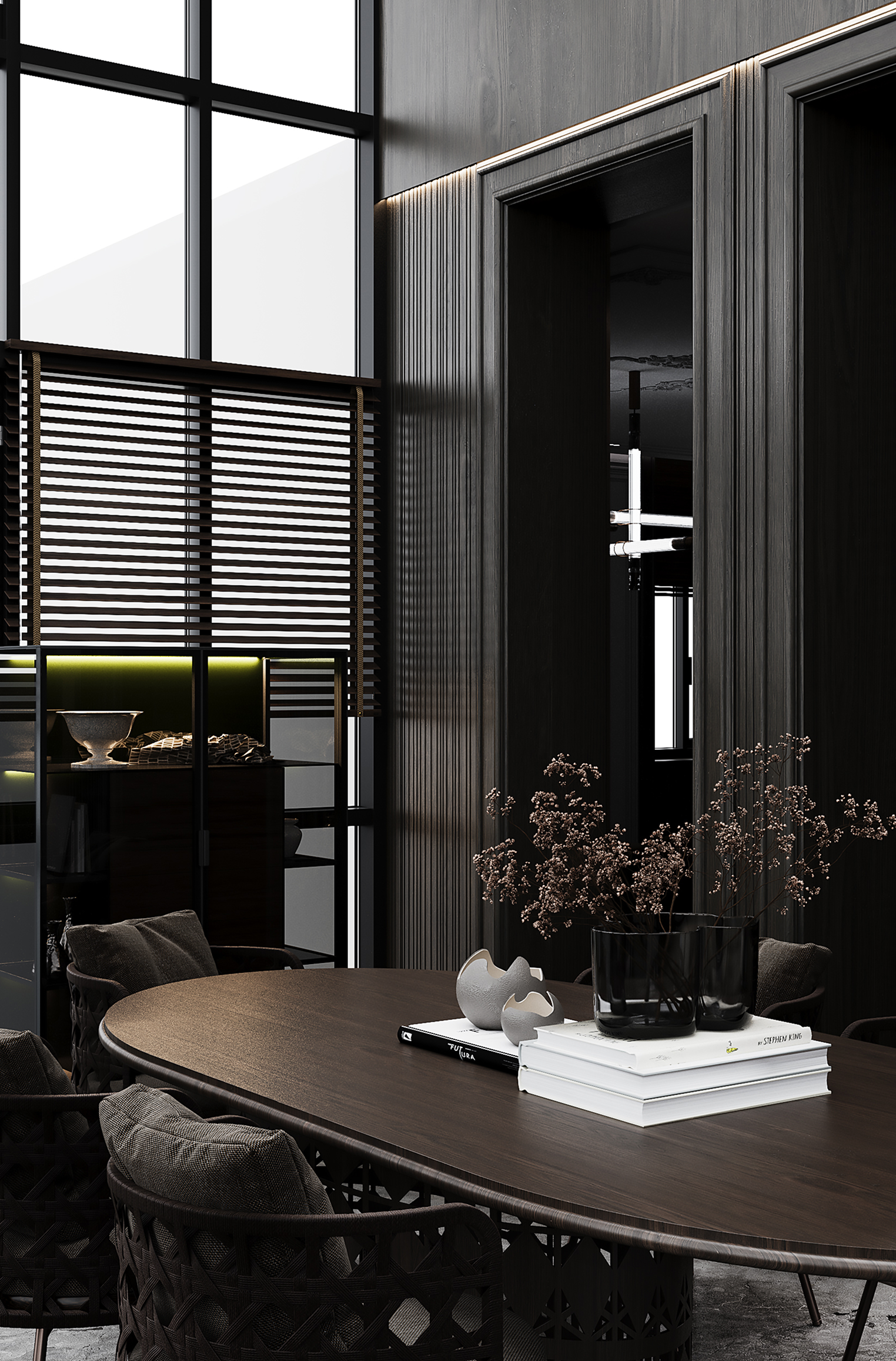
The dining area was conceived as a setting for unhurried gatherings and everyday family moments. Located on a spacious covered terrace with a glass roof, it allows residents to enjoy morning light or watch rainfall while remaining protected within a private, enclosed environment.
Staircase area
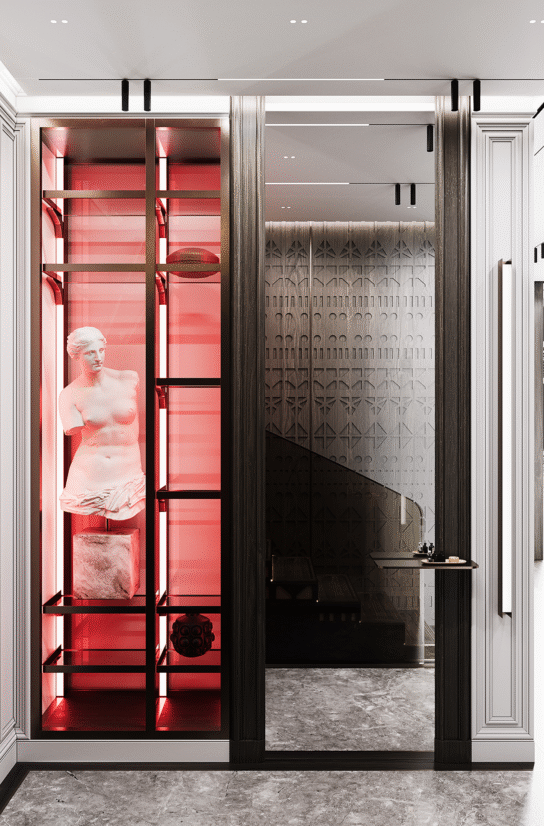
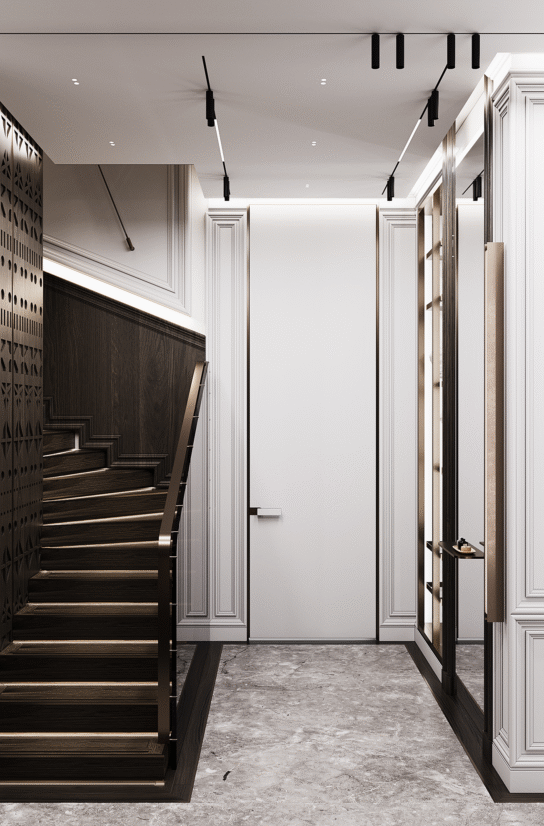
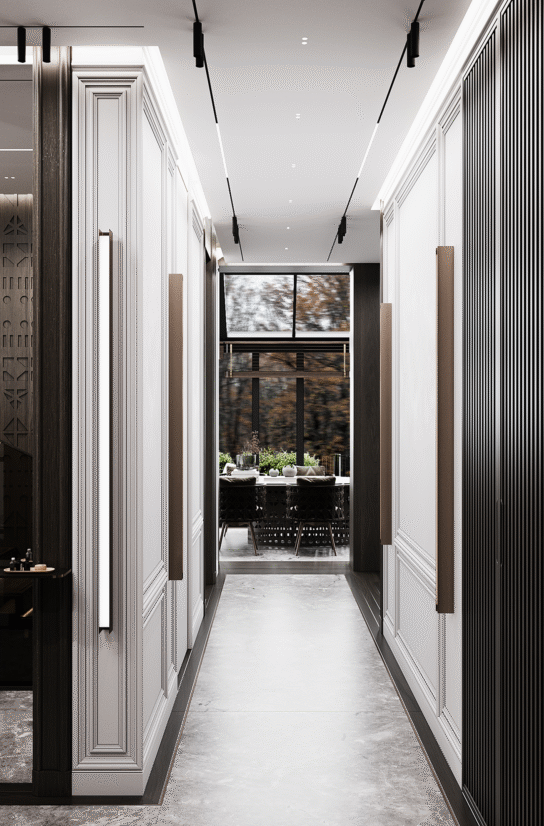
The staircase functions as a calm transition between the two levels of the apartment, without visual dramatization. Clear geometry, vertical articulation, and controlled lighting establish a sense of order and continuity within the overall spatial structure.
Guest bathroom
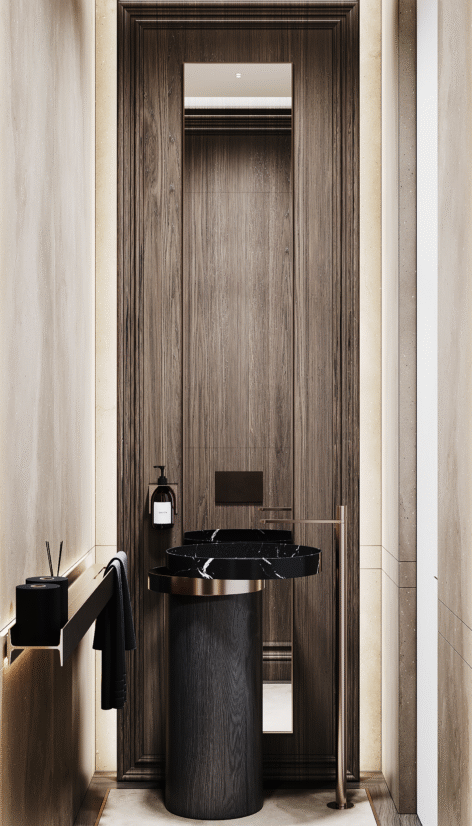
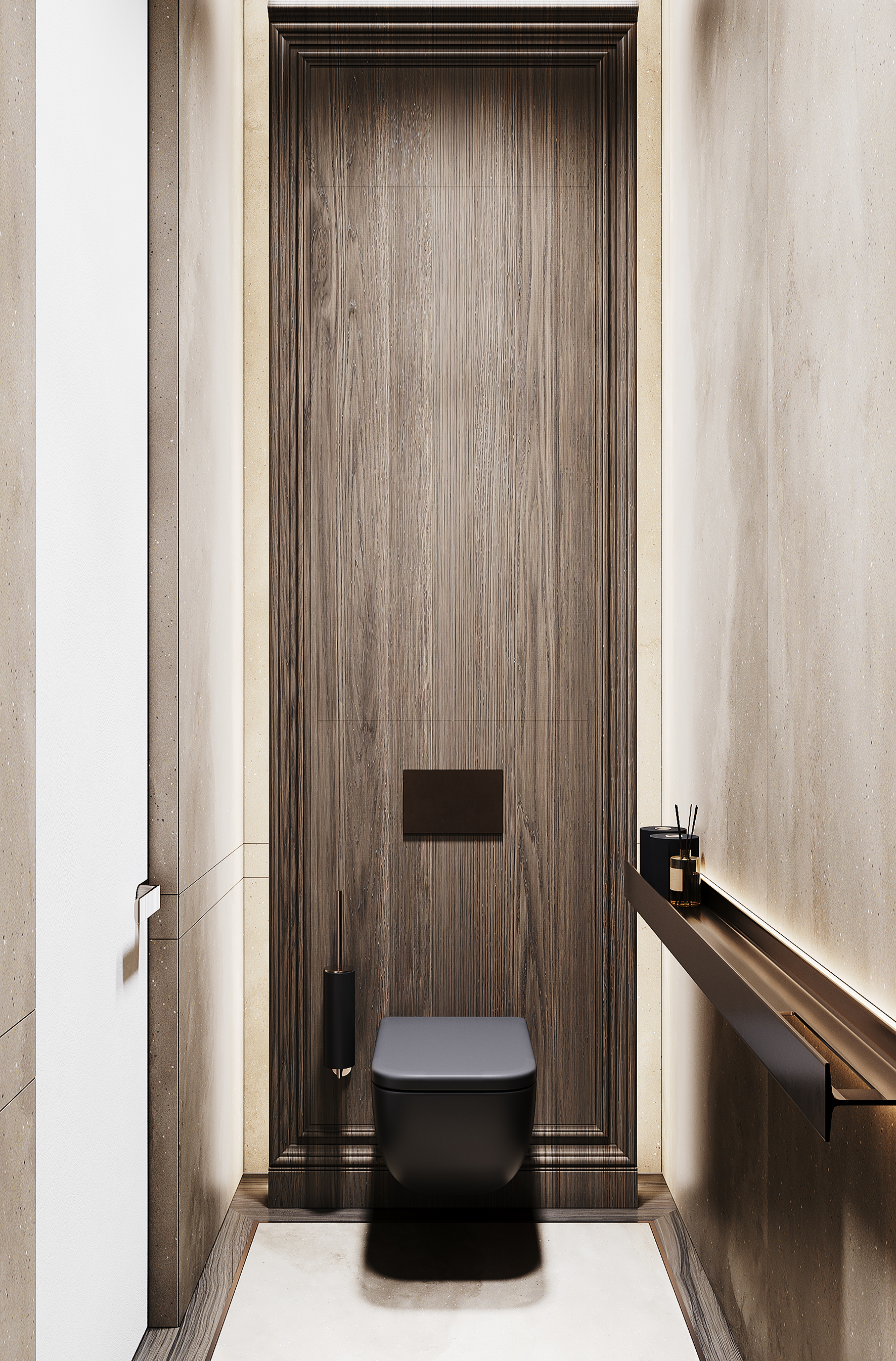
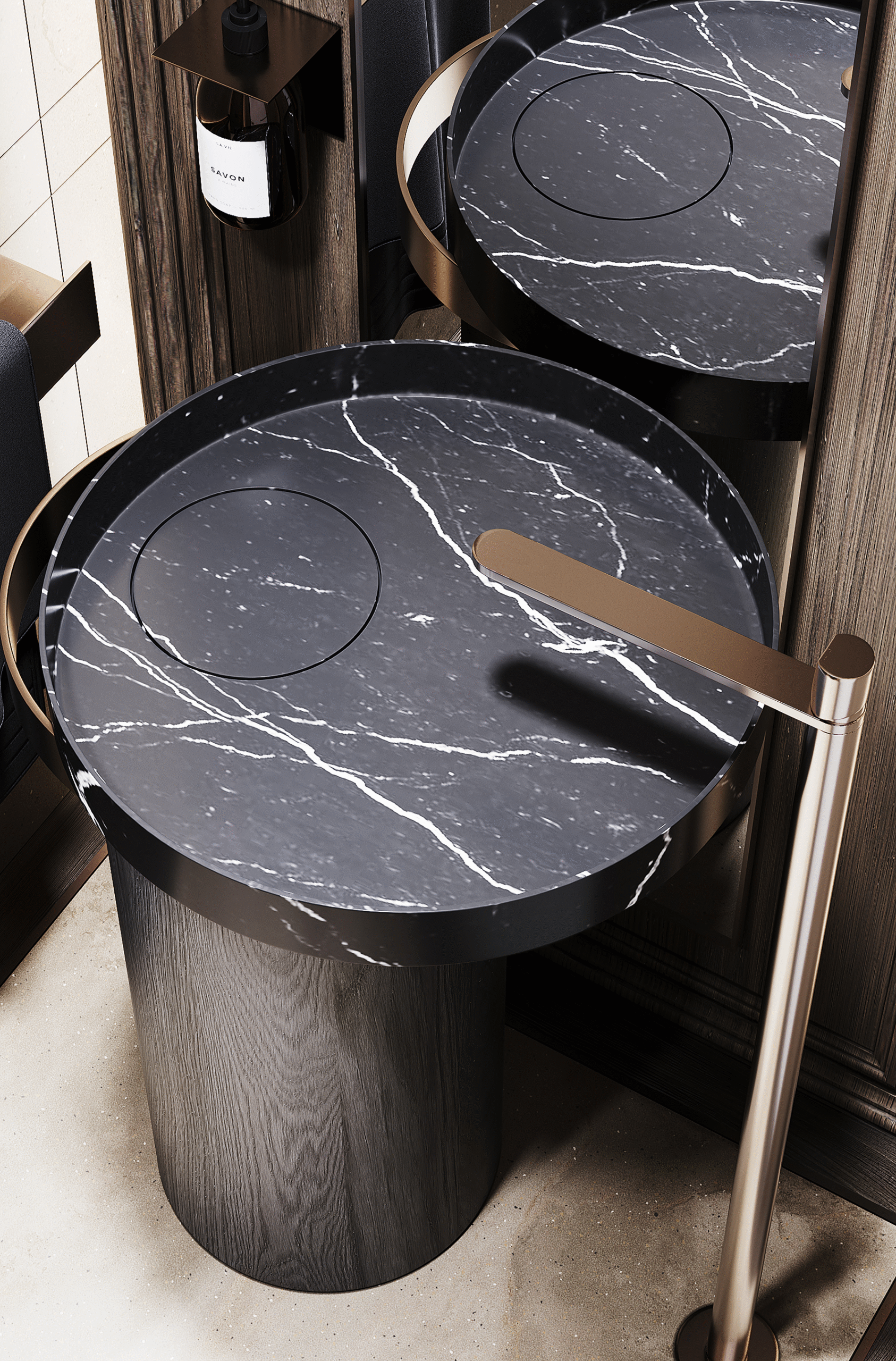
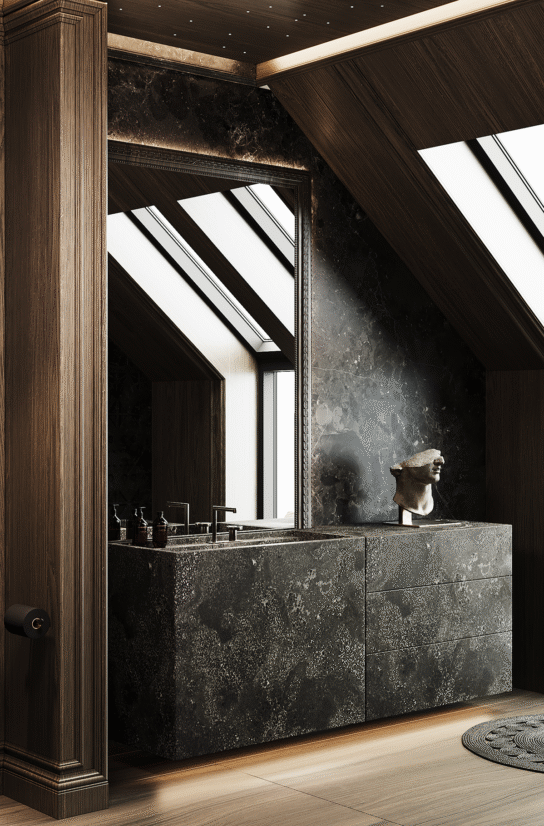
The guest bathroom is designed as a compact space with precise proportions and a clear compositional logic. The focus is placed on material quality and clean, disciplined lines.
Home office
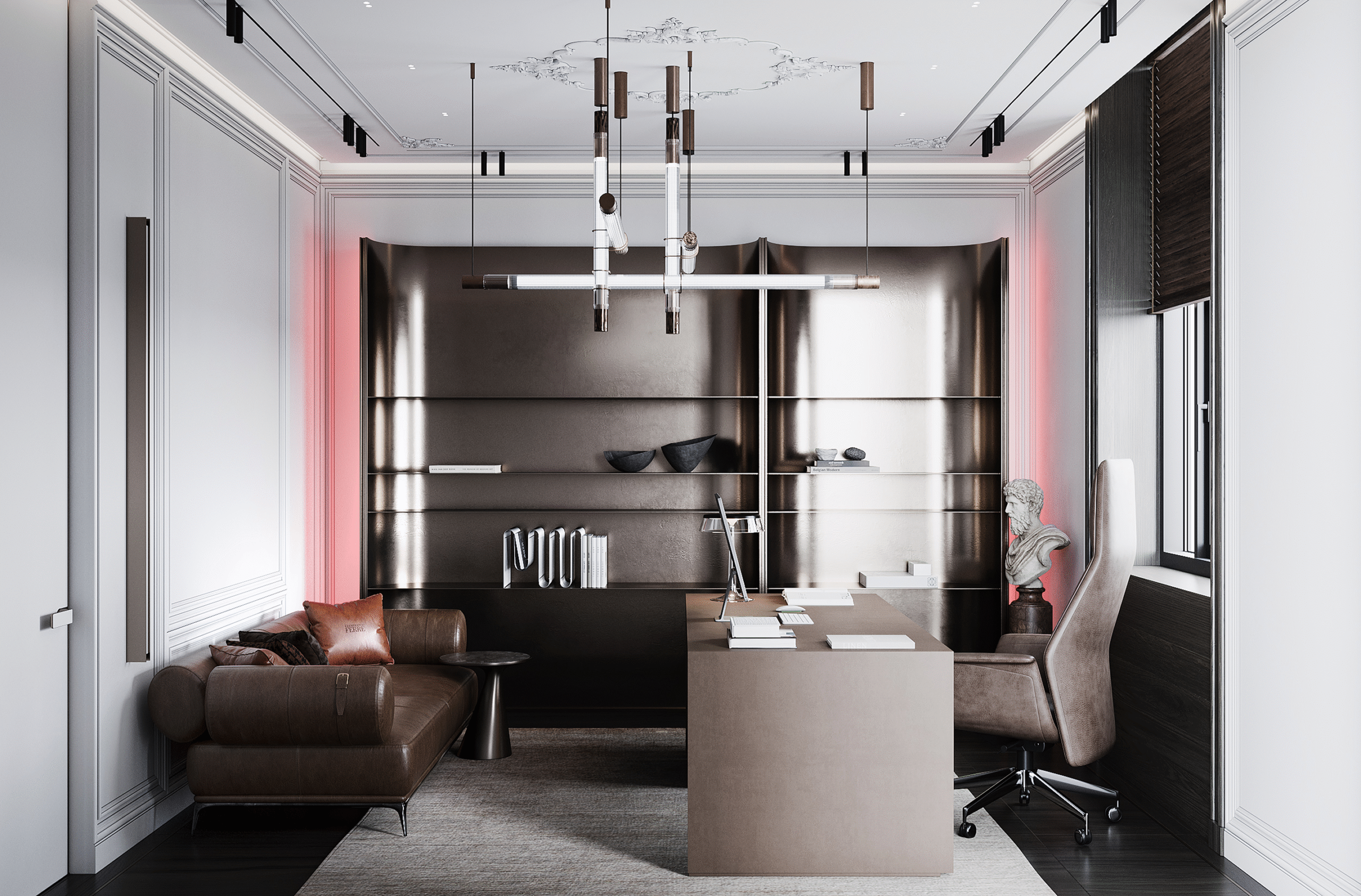
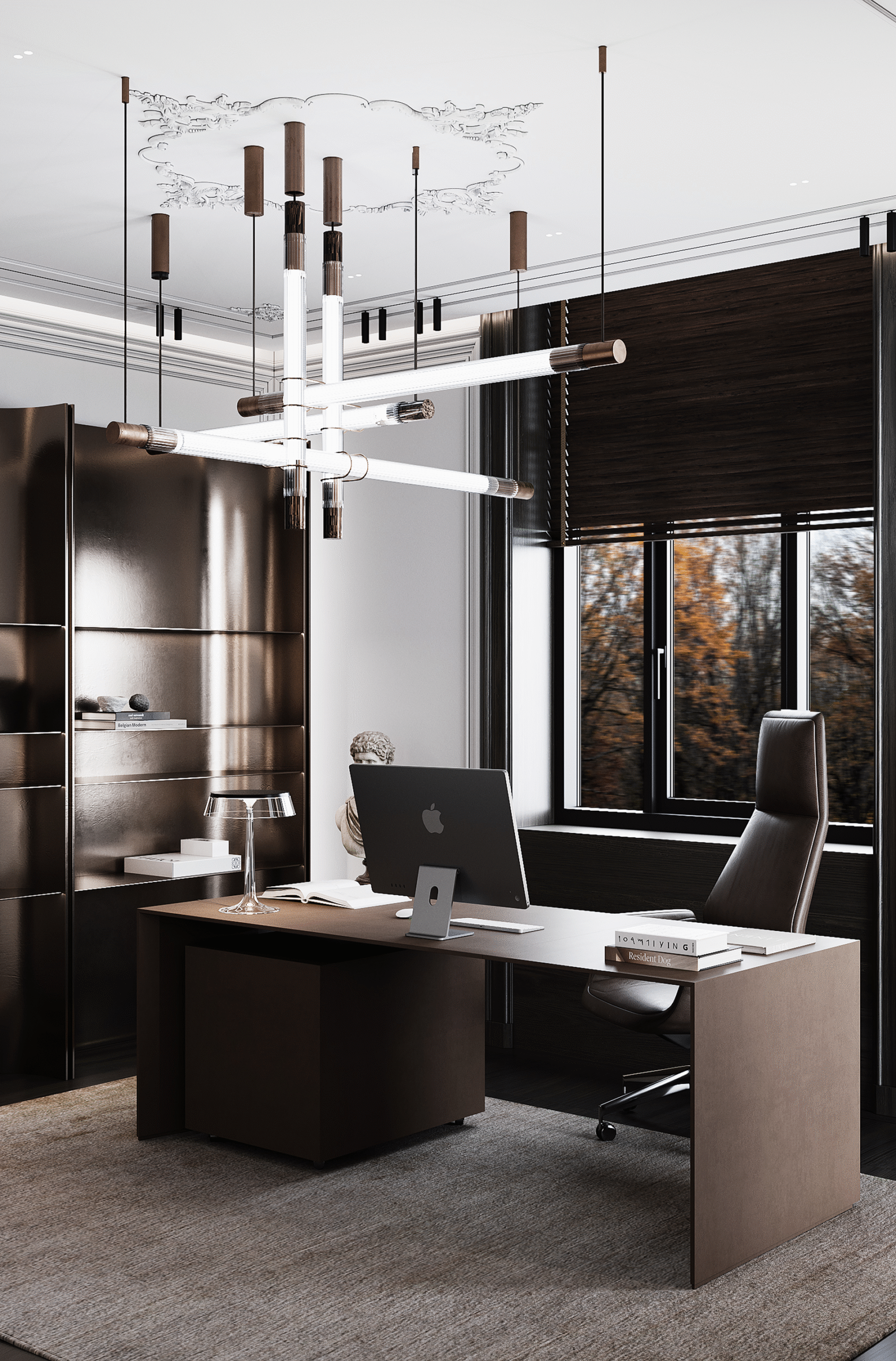
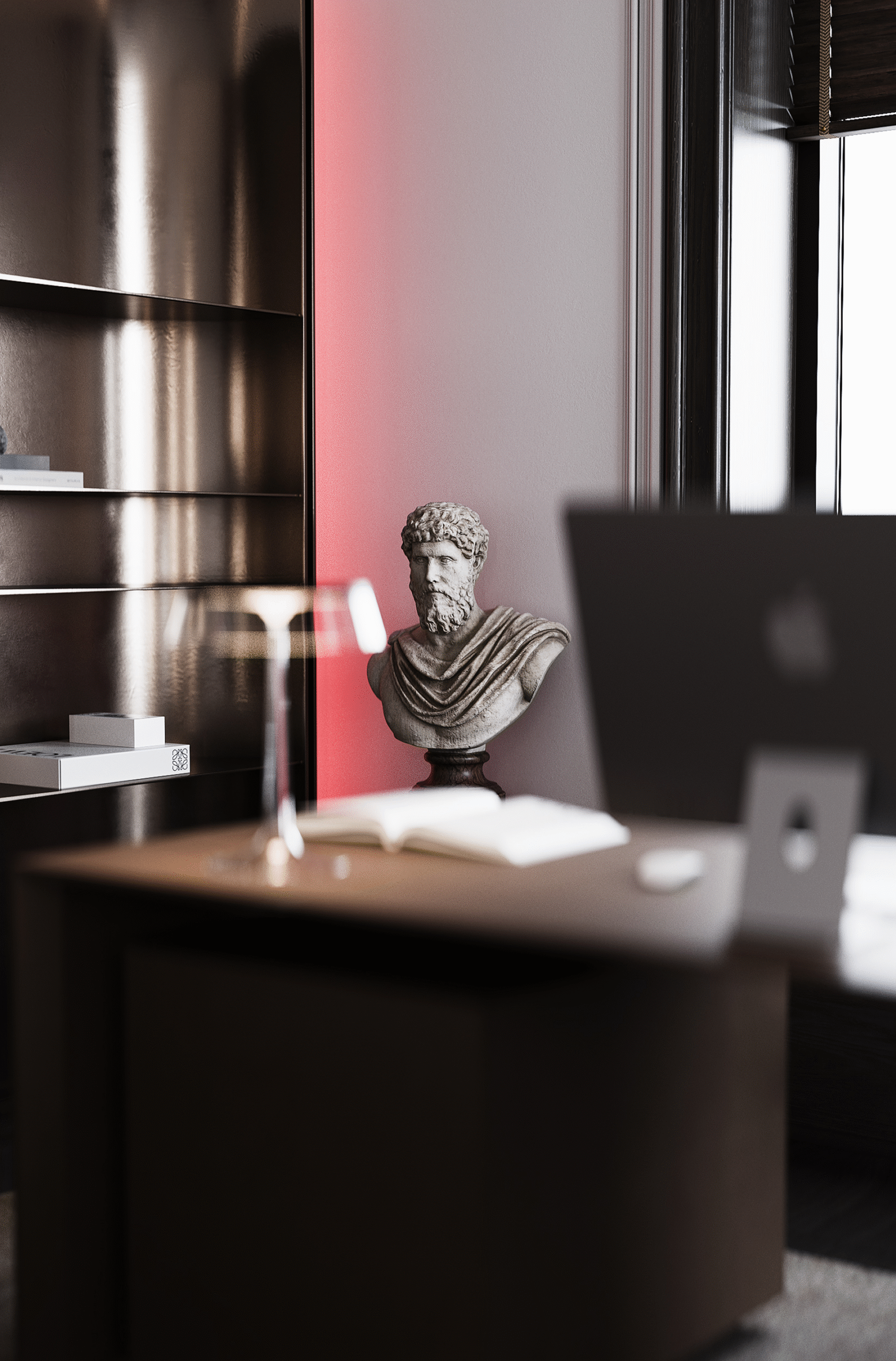
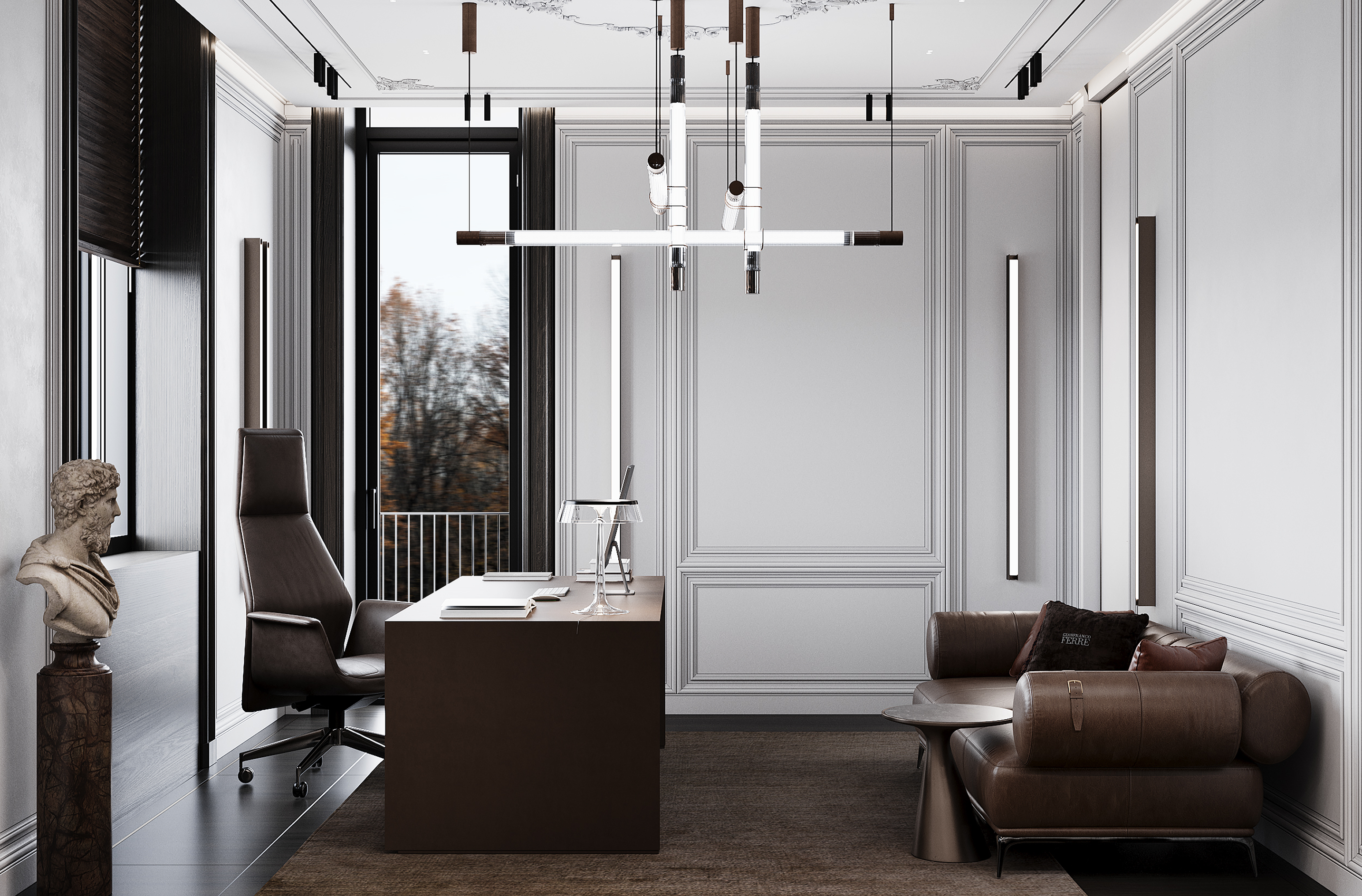
The home office is organized around functional clarity, supporting focused work without visual distraction. A restrained palette and material choices define the atmosphere, while decorative elements are used selectively as controlled accents.
Master bedroom
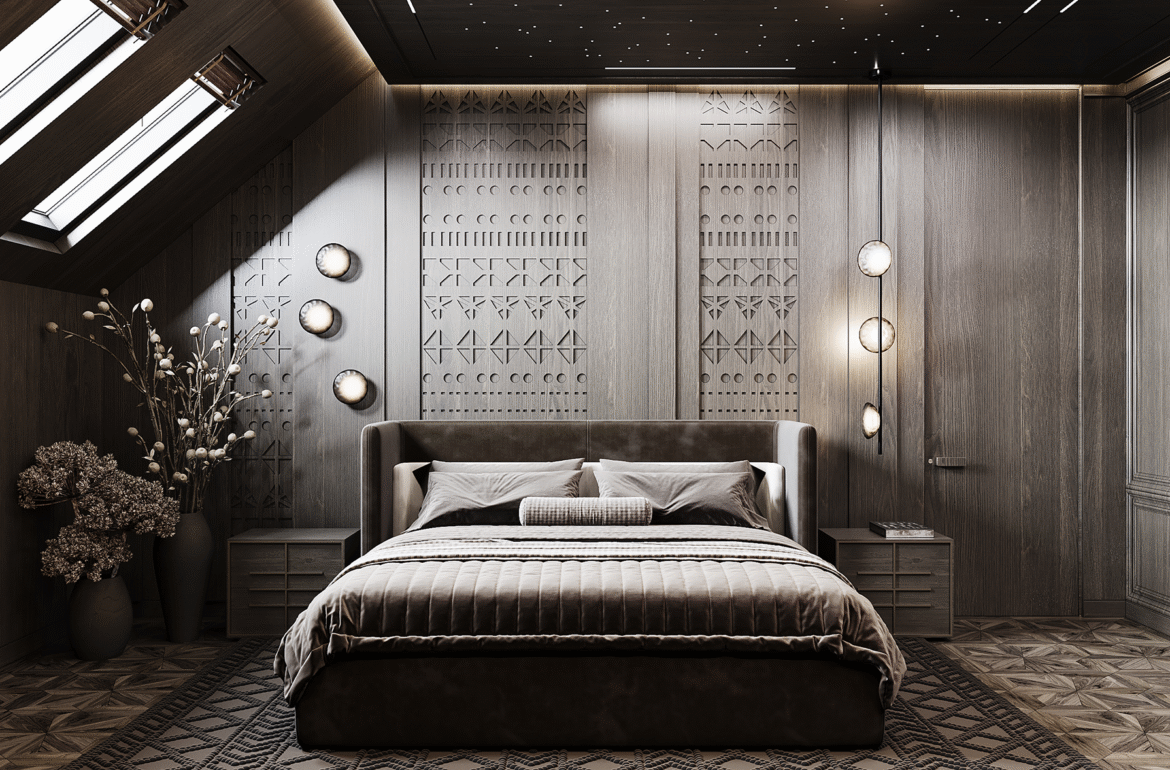
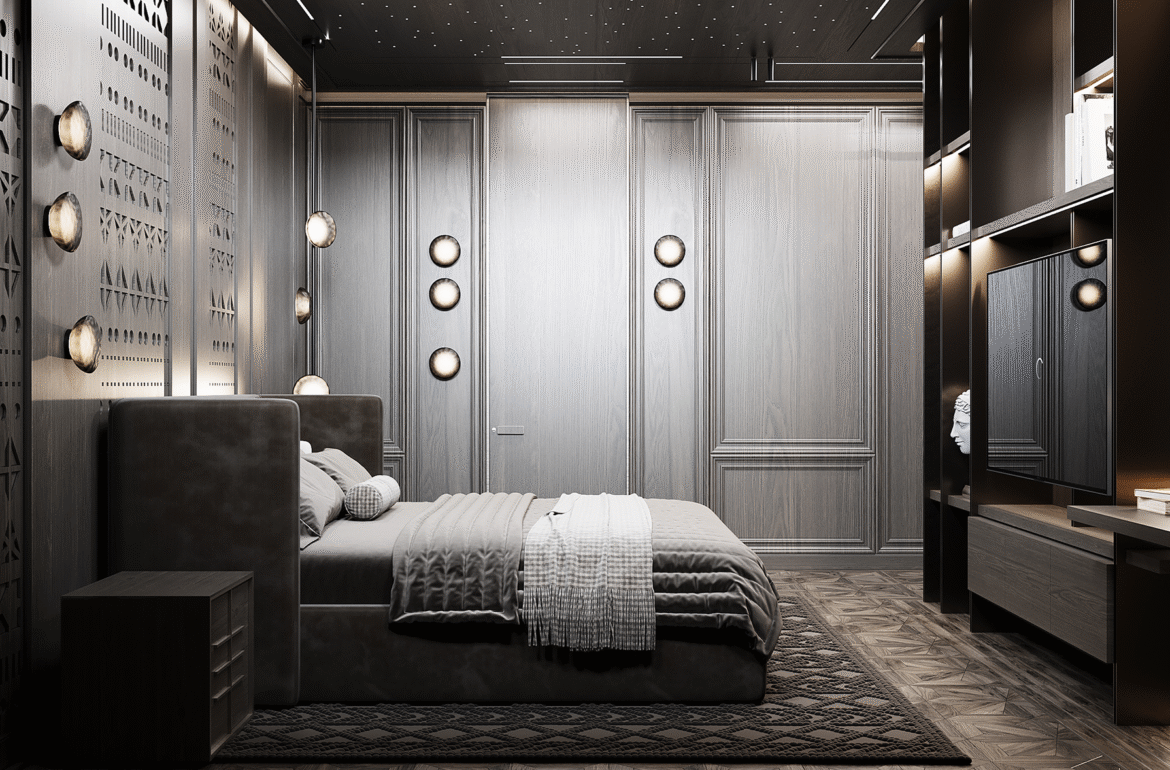
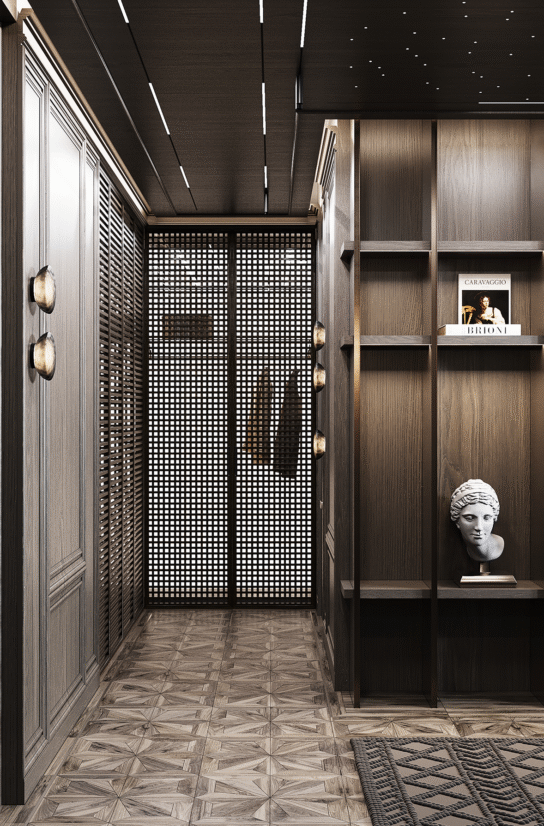
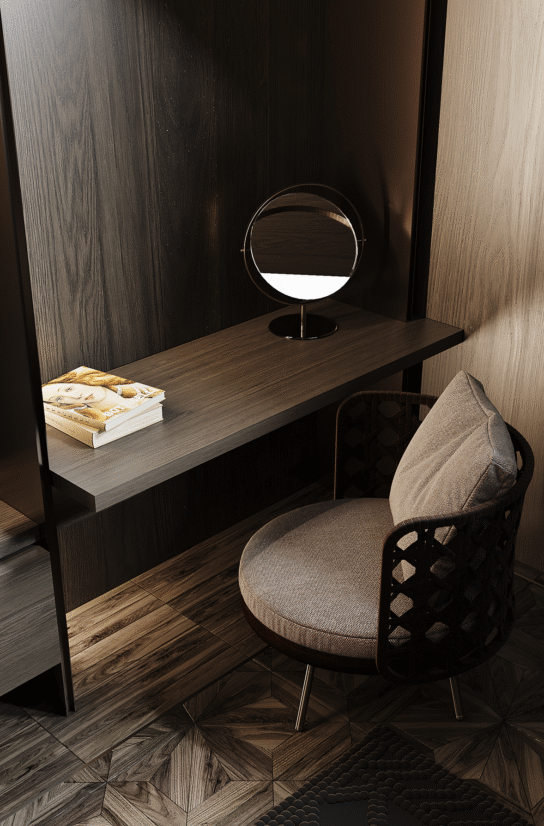
The master bedroom includes a compact walk-in wardrobe and a dedicated vanity area, seamlessly integrated into the room’s structure. Wooden elements appear across wall panels, furniture, and detailing, forming a cohesive and balanced spatial language.
Master bathroom
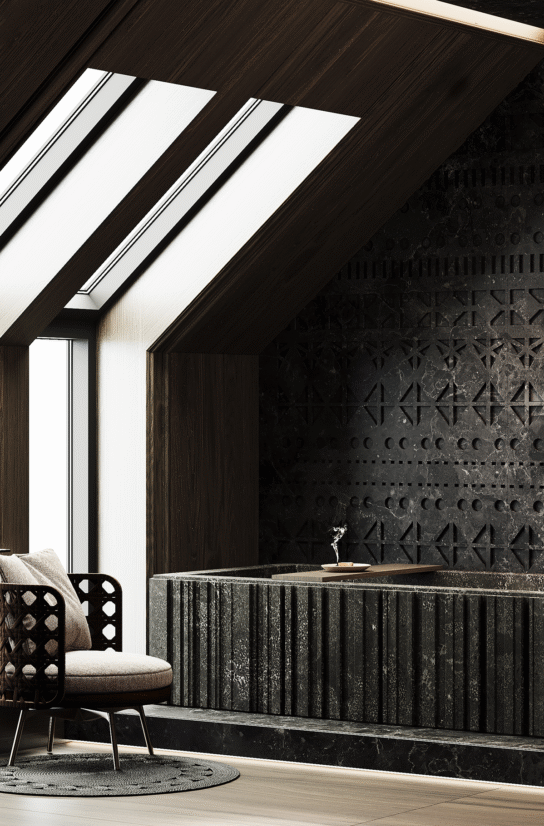
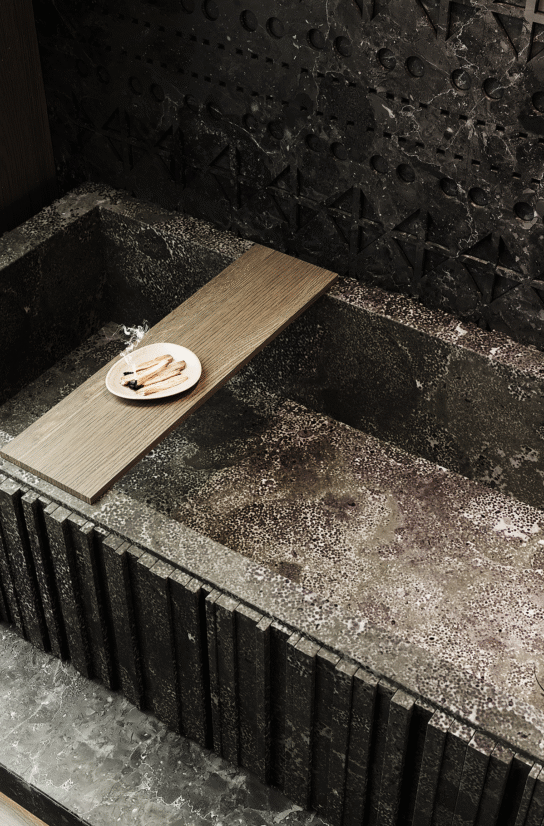
The master bathroom continues the compositional logic of the apartment through the repetition of ornamental motifs. These elements function as part of the spatial structure rather than decoration, reinforcing continuity across zones.
Children’s room
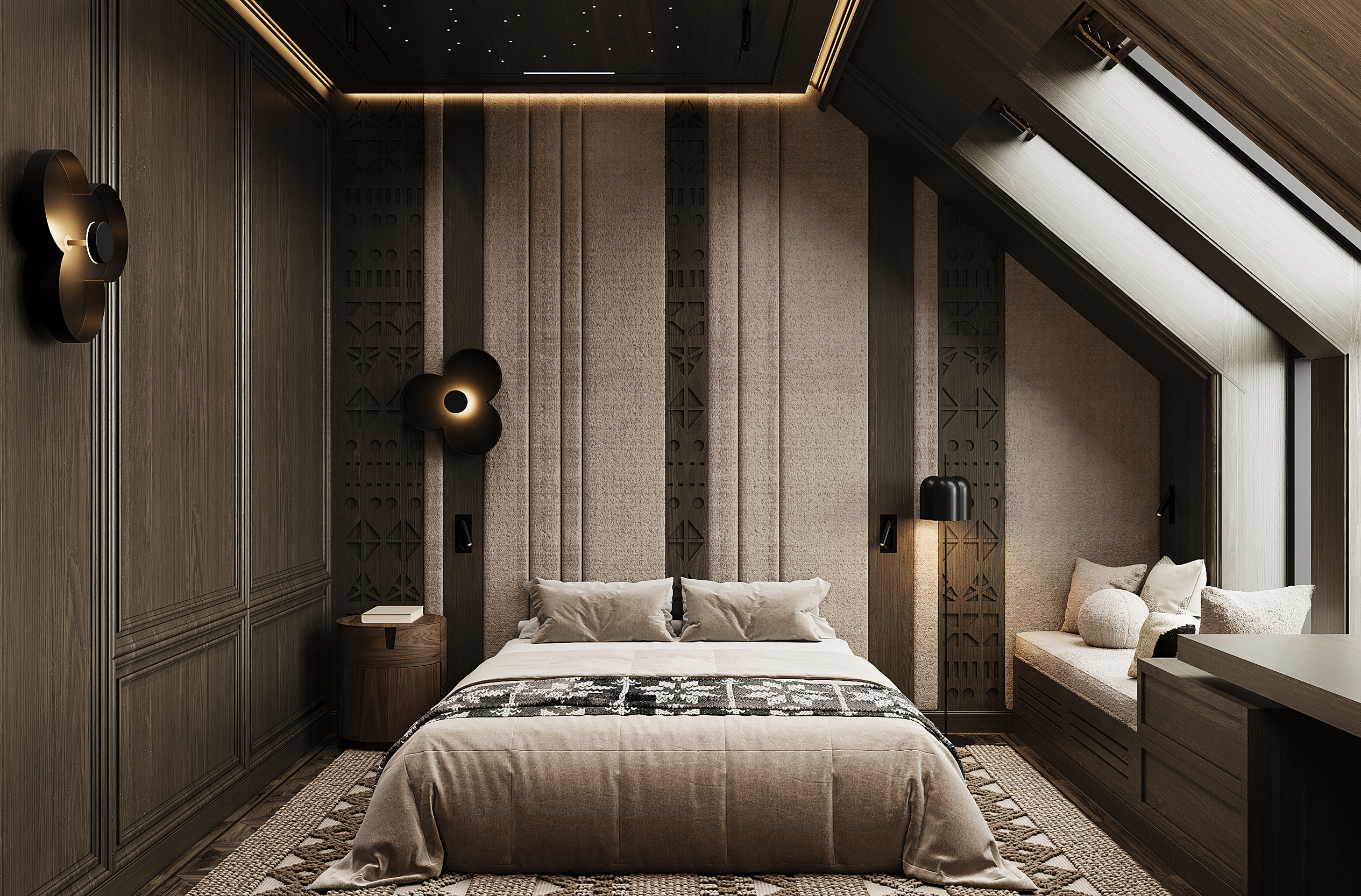
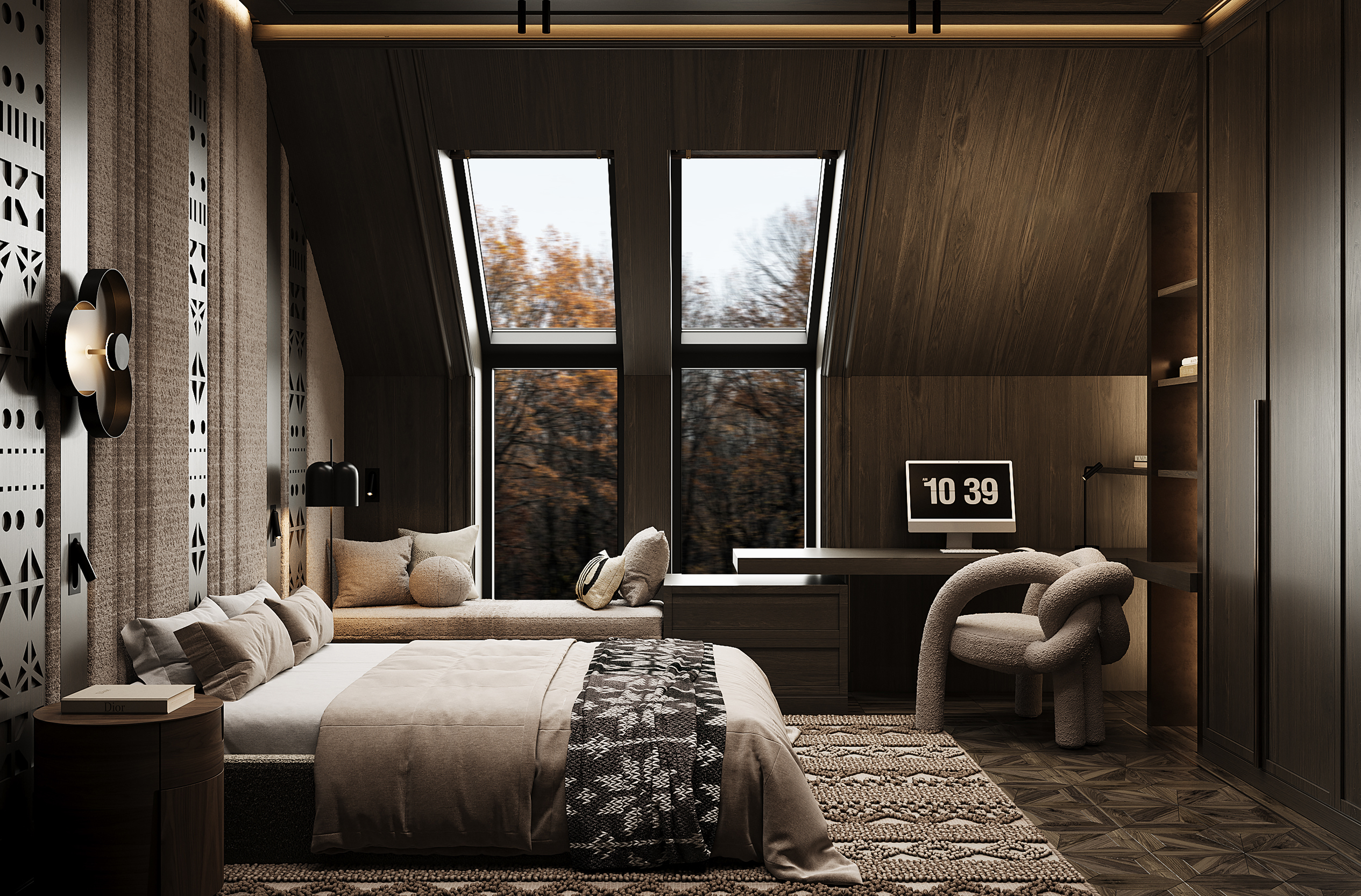
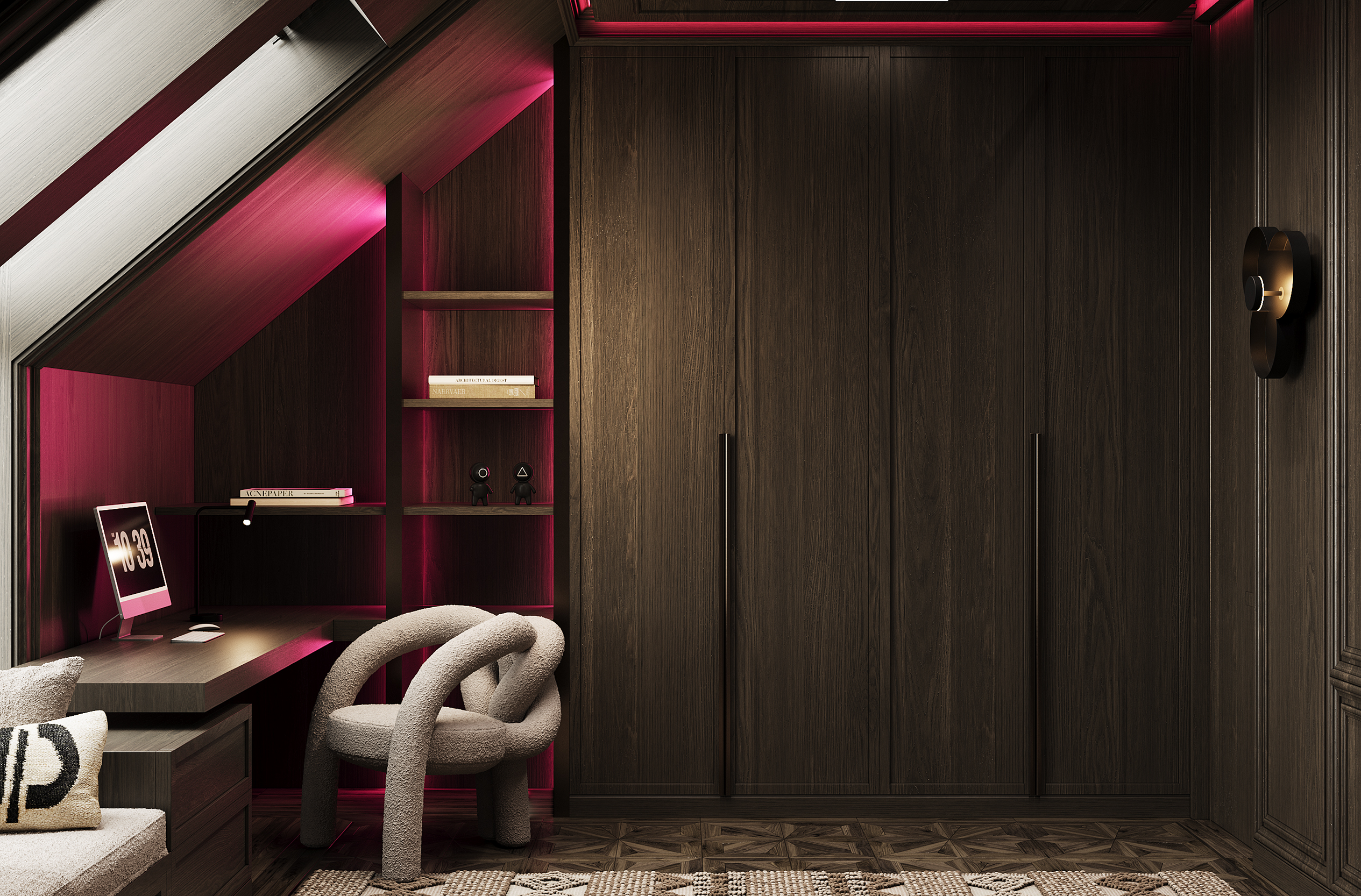
Children’s rooms are designed with long-term relevance in mind. Planning solutions, furniture, and materials are selected to remain appropriate as the child grows, allowing the space to adapt over time without major redesign. At the same time, the room remains fully aligned with the overall architectural concept, preserving the unified character of the interior.
Would you like to order?
similar project?
Ready to discuss your project?


